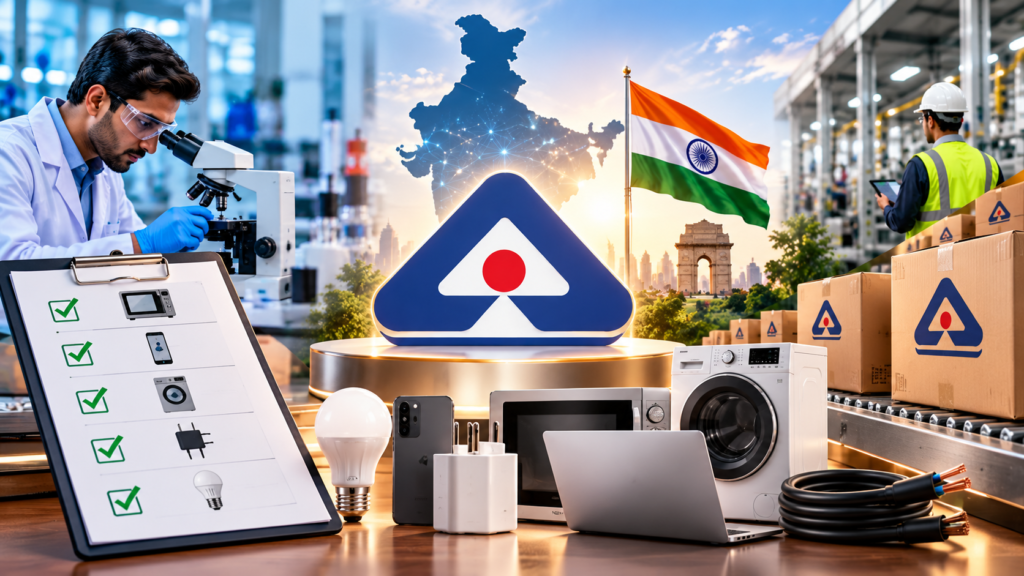

BIS certification for electronic products is a mandatory quality and safety approval issued by India’s Bureau of Indian Standards (BIS) that ensures electronics meet strict safety, performance, and environmental standards before being sold in the Indian market. This certification protects consumers from hazardous devices and gives manufacturers a competitive advantage. Products carrying the ISI mark—the official BIS certification badge—have passed rigorous testing and comply with Indian Standards that cover electrical safety, durability, electromagnetic compatibility, energy efficiency, and environmental responsibility. For any electronic device sold in India, from smartphones to refrigerators, BIS certification is not just a quality indicator; it’s a legal requirement that separates legitimate products from substandard alternatives.
Understanding BIS Certification for Electronic Products
If you’re manufacturing electronics for the Indian market or simply want to understand product safety standards, BIS certification is central to the conversation. The Bureau of Indian Standards, established in 1987, serves as India’s official standards-setting authority. When it comes to electronics, BIS doesn’t just create guidelines—it enforces them through mandatory product testing, factory audits, and ongoing market surveillance.
The ISI mark, which appears on BIS-certified products, isn’t merely a decorative badge. It’s proof that a product has survived a rigorous evaluation process involving multiple testing facilities, quality audits, and compliance verification. For manufacturers, this certification opens doors to the Indian market. For consumers, it’s a safeguard against dangerous electronics that could cause fires, electric shocks, or environmental contamination.
Why This Matters for Your Electronics Business
Whether you’re an exporter looking to enter the Indian market or a local manufacturer competing against imports, understanding BIS certification is non-negotiable. Here’s the reality: selling non-certified electronics in India, regardless of their quality, is illegal and can result in severe penalties, product recalls, and damage to brand reputation.
The Real Impact of BIS Certification: Beyond Compliance
Many manufacturers view BIS certification as just another hurdle to clear. But there’s a bigger picture.
For Manufacturers:
- Access to a market of 1.4 billion consumers
- Protection against counterfeit competition
- Ability to negotiate better rates with institutional buyers and retailers
- Insurance against liability claims related to product defects
- Enhanced export opportunities (other countries often recognize BIS standards)
For Consumers:
- Confidence that electrical appliances won’t catch fire due to design flaws
- Assurance that battery-powered devices won’t explode
- Knowledge that products meet energy efficiency standards
- Peace of mind that hazardous materials are disposed of responsibly
Key BIS Standards for Electronics: What You Need to Know
BIS has developed over 20,000 standards, but for electronics, several are critical. Here’s what manufacturers typically need to navigate:
1. IS 13252: 2010 – Safety of Information Technology Equipment
This standard covers computers, laptops, tablets, printers, networking devices, and data center equipment.
What it tests:
- Electrical Safety: Prevents overload, short circuits, and internal fires. The testing checks how equipment responds when it overheats or when there’s electrical stress.
- Mechanical Safety: Ensures cables won’t snap, cooling vents aren’t blocked during normal use, and there are no sharp edges that could cut users.
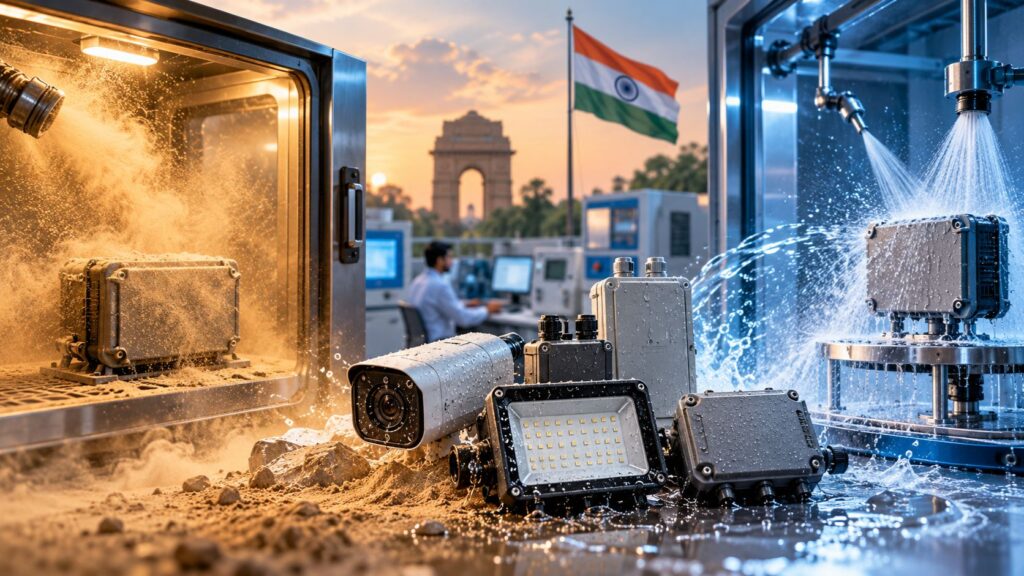
- Environmental Stress: Equipment must function correctly across India’s varied climate zones—from high humidity in coastal areas to dust in arid regions.
- Electromagnetic Compatibility (EMC): The device shouldn’t interfere with other electronics, and it should resist electromagnetic interference from external sources.
Real-world example: When a laptop manufacturer submits to BIS, testing labs will verify that the power adapter won’t overheat when the device is used in a poorly ventilated room, that the battery won’t swell or leak, and that the device’s emissions don’t disrupt other electronics.
2. IS 14151: 2008 – Safety of Household and Similar Electrical Appliances
This standard applies to the kitchen and home appliances that most households rely on daily.
Covers these appliance types:
- Kitchen appliances (microwave ovens, toasters, electric kettles, refrigerators)
- Climate control devices (air conditioners, heaters, fans)
- Laundry appliances (washing machines, dryers)
- Water heating systems
What the standard requires:
- Insulation Testing: Multiple layers of insulation are tested to ensure they won’t degrade from heat, moisture, or normal wear.
- Thermal Safety: Heat-generating appliances are tested to ensure they won’t exceed safe surface temperatures. For instance, a toaster oven must be designed so that its outer casing doesn’t become hot enough to cause burns.
- Protection Against Moisture and Dust: Especially critical in India’s climate, appliances must withstand humidity and dust without developing electrical faults.
- Grounding and Leakage Current: The standard ensures that if an appliance develops a fault, the current will be safely grounded rather than passing through a user.
Practical insight: A manufacturer of microwave ovens must ensure the internal shielding prevents microwave radiation leakage and that the door latch won’t fail, allowing the microwave to operate with the door open.
3. IS 302: Part 1 – 2015 General Safety Requirements for Household Appliances
This is an umbrella standard covering multiple appliance categories. It’s essential because it provides baseline safety principles that apply across different product types.
Key requirements:
- Creepage and Clearance Distances: Electrical components inside the appliance must be spaced appropriately to prevent arcing (electrical sparks jumping between components).
- Flame Retardancy: Materials used in the appliance must resist ignition. If a component catches fire, it shouldn’t spread rapidly.
- Protection from Foreign Objects: The design must prevent situations where inserting a metal object could cause an electrical hazard (like putting a fork into a toaster).
- Child Safety: For appliances that children might use, there are additional safety features like cool-touch surfaces or lockable controls.
4. IS 16046: 2015 – Safety of Battery-Powered Devices
With the explosion of smartphones, power banks, and battery-operated tools, this standard has become increasingly critical.
What it covers:
- Overcharge Protection: Batteries are tested to ensure they won’t overheat if left plugged in continuously. This is crucial for preventing battery fires, which are a real hazard.
- Temperature Management: Batteries are tested at high and low temperatures to ensure they won’t explode or leak.
- Physical Abuse Testing: The standard includes testing for crushing, puncturing, and impact to ensure the battery remains safe even if the device is dropped or sat on.
- Leakage and Swelling: Testing ensures that chemical leakage won’t occur and the battery casing won’t burst.
Why this matters: Battery-related incidents—smartphones catching fire, power banks exploding—make headlines regularly. BIS certification ensures that manufacturers have designed safety mechanisms to prevent these failures.
5. IS 15885: 2014 – Energy Efficiency of Household and Commercial Appliances
In a country increasingly concerned about energy consumption and electricity costs, this standard has gained prominence.
What it measures:
- Seasonal Energy Consumption: For air conditioners and refrigerators, the standard measures how much energy is consumed over extended periods under realistic usage conditions.
- Efficiency Ratings: Products receive star ratings (1 to 5 stars) indicating efficiency. Five-star appliances consume significantly less energy than one-star equivalents.
- Standby Power Consumption: Testing includes how much energy devices consume when in standby mode, which is important for devices like televisions.
Market advantage: Consumers increasingly look for energy-efficient appliances to reduce electricity bills. BIS certification allows manufacturers to prominently advertise their efficiency ratings.
6. IS 16419: 2016 – Audio, Video, and Multimedia Equipment
This standard covers entertainment electronics like televisions, projectors, speakers, and sound systems.
Testing includes:
- Safety from Electrical Hazards: Television sets use high voltages and must be thoroughly insulated.
- Audio and Video Quality: The standard ensures that the product performs as advertised—resolution, refresh rate, color accuracy, and sound quality.
- Thermal Management: High-power amplifiers and projection lamps generate significant heat; the standard ensures adequate cooling.
- Component Durability: The standard tests how components age, ensuring products maintain quality throughout their expected lifespan.
The BIS Certification Process: Step-by-Step
Getting BIS certification isn’t complicated if you’re organized. Here’s how it typically works:
Step 1: Application and Documentation (2-4 weeks)
You’ll need to submit to BIS:
- Detailed product specifications and technical drawings
- Manufacturing process descriptions
- List of key components and suppliers
- Testing reports from accredited labs (if already obtained)
- Quality assurance procedures
Pro tip: Many manufacturers are rejected in this stage simply because of incomplete documentation. Ensure every specification is crystal clear and verifiable.
Step 2: Product Testing (4-8 weeks)
BIS will typically send your product samples to one of their accredited testing laboratories. For electronics, this involves:
- Electrical safety tests
- Performance testing (depending on product type)
- Environmental stress testing
- Durability testing
What happens here: Your product is essentially “stressed” in various ways to confirm it won’t fail under real-world conditions. This is where many products first fail—poor insulation, inadequate cooling, or components that degrade under temperature stress are often discovered during this phase.
Step 3: Factory Audit (1-2 weeks)
BIS inspectors visit your manufacturing facility to verify:
- That your production quality matches what you submitted
- That quality control procedures are actually being followed
- That you’re using the correct components and suppliers
- That workers are trained in safety procedures
- That documentation and traceability systems are in place
Reality check: A state-of-the-art factory with poor quality control can fail this step. BIS looks for evidence that quality isn’t accidental—it’s built into the process.
Step 4: Certification Grant (1-2 weeks)
If everything passes, BIS issues your license and permits you to display the ISI mark on products and packaging.
Step 5: Ongoing Compliance (Continuous)
This is critical: BIS doesn’t certify once and forget about you.
- Market Surveillance: BIS buys products from retail stores to verify that what’s being sold matches what was certified.
- Periodic Factory Inspections: BIS conducts unannounced visits (typically annually) to ensure standards are being maintained.
- Annual License Renewal: You’ll need to renew your BIS license annually and pay a fee based on product category.
Common issue: Many manufacturers get complacent after certification and start cutting corners—using cheaper components, reducing quality control checks, or outsourcing production without maintaining standards. BIS catches these violations, which can result in license suspension.
Timeline and Costs: What to Expect
Realistic Timeline: 3-6 months from application to certification (depending on product complexity and whether you need to make modifications)
Cost Estimates:
- Application and documentation support: ₹20,000-50,000
- Testing fees: ₹30,000-2,00,000 (varies significantly by product type)
- Annual license renewal: ₹5,000-50,000
- Consultant services (if needed): ₹50,000-2,00,000
The costs are substantial but represent a small investment compared to the market access and risk mitigation they provide.
Common Challenges in BIS Certification and How to Overcome Them
Challenge 1: Component Sourcing Issues
Many manufacturers source components from multiple suppliers. If even one supplier changes a component without notification, it can fail BIS testing.
Solution: Maintain strict supplier agreements requiring notification of any component changes. Keep detailed records of all components used and consider qualifying backup suppliers.
Challenge 2: Climate and Environmental Testing
India’s diverse climate—from humid coastal areas to arid inland regions—makes environmental testing complex. Products that work fine in air-conditioned facilities might fail in humid warehouses or dusty retail stores.
Solution: Test your products in realistic conditions before submitting to BIS. Don’t assume laboratory conditions represent what customers will experience.
Challenge 3: Labor Training and Turnover
Quality control requires trained workers who understand the standards. High turnover in manufacturing facilities can create inconsistency.
Solution: Document all quality procedures thoroughly. Implement regular training programs. Consider investing in automated quality control systems where feasible.
Challenge 4: Design vs. Manufacturing Reality
Sometimes a design passes testing but manufacturing inconsistencies cause failures.
Solution: Implement robust quality control at every production stage. Use statistical process control to identify drift before it becomes a problem.
Challenge 5: Documentation and Traceability
BIS requires complete traceability—knowing which raw materials went into which products and when.
Solution: Implement a Manufacturing Execution System (MES) or at minimum, detailed batch tracking. This also helps with recalls if issues arise.
The Business Case: Why BIS Certification Pays For Itself
Let’s be clear: BIS certification requires investment. But consider the returns:
- Market Access: Without certification, you can’t legally sell in India. With certification, you access a rapidly growing consumer market.
- Consumer Confidence: Indian consumers increasingly look for the ISI mark. It’s the difference between a 5% price premium and needing to discount 20% to compete.
- Institutional Sales: Government procurement, bulk purchases by retailers, and B2B sales often require BIS certification. These channels are typically more profitable than direct consumer sales.
- Risk Mitigation: If an uncertified product causes injury or property damage, manufacturers face massive liability. BIS certification provides some legal protection.
- Export Opportunities: Many countries recognize BIS standards or use them as baseline requirements for imports.
Special Considerations for Different Product Categories
1. Smartphones and Consumer Electronics
The convergence of battery safety, wireless emissions, and intense heat generation makes smartphones complex to certify. Key considerations:
- Battery testing is extremely rigorous
- Thermal management must work in high ambient temperatures
- Wireless emissions must meet global standards
- Software reliability is increasingly tested
2. Kitchen Appliances
Heat, moisture, and the potential for electrical contact with conductive materials (water, metal) make kitchen appliance standards particularly stringent.
- Seal integrity is critical
- Thermal protection devices must be bulletproof
- Grounding and leakage current limits are strict
3. Children’s Electronics
Toys, educational tablets, and other products for children face additional safety requirements:
- No small detachable parts that could be swallowed
- Reduced electrical shock hazards (lower voltage limits)
- Limited electromagnetic emissions
- Non-toxic materials
FAQ: BIS Certification for Electronic Products
For most electronics, no. Mandatory products must have BIS certification before sale. Selling non-certified mandatory electronics is illegal and can result in seizure of products, hefty fines, and imprisonment.
BIS licenses are valid for 5 years, but you must renew annually. Annual renewal involves payment and potentially factory inspection.
Imports of mandatory products require BIS certification for the importer as well. Many importers obtain certification for their own brand/models after importing.
BIS will provide a detailed failure report. You can make modifications and retest. Many products require 2-3 submission cycles before passing.
Typically annually, though BIS reserves the right to conduct unannounced inspections. Some high-risk categories are inspected more frequently.
BIS standards are recognized in many Commonwealth countries and increasingly by developing nations. For developed countries, you'll typically need separate certifications (CE, FCC, etc.).
Not always. Significant changes in design, components, or specifications require separate certification. Minor cosmetic changes don't.
Conclusion
BIS certification for electronic products isn’t a bureaucratic hassle—it’s a business necessity that separates serious manufacturers from fly-by-night operators. The process ensures that your products are safe, efficient, and built to last.
For consumers, the ISI mark represents confidence. For manufacturers, it represents market access and competitive advantage. If you’re serious about building a sustainable electronics business in India, investing in BIS certification isn’t optional. It’s the foundation upon which credibility, consumer trust, and profitability are built.