
Plastic Waste EPR Registration in India (2026): Who Is a PIBO, Categories, Penalties & Step-by-Step Process
If your product reaches customers in a plastic pouch, bottle, sachet or laminated pack, you may already carry a legal obligation for that plastic’s afterlife. This guide explains who must register, how the four packaging categories work, what the 2026 rule changes mean, and how to apply, in plain English.
India’s plastic packaging rules no longer stop at banning certain items. They ask the businesses that put packaging into the market to fund and prove its recovery. For a D2C brand, importer or FMCG manufacturer, the first practical question is simple: are we a PIBO, and are we registered? The answer matters more this year. In March 2026 the Ministry of Environment, Forest and Climate Change (MoEFCC) amended the rules, and in August 2026 CPCB publicly pressed covered entities to register.
JS Certification is a compliance and certification consultancy that offers EPR registration support for plastic waste management. This article is a neutral explainer first, so you can understand the rules before deciding whether you need help.
What is EPR registration for plastic waste?
Quick answe
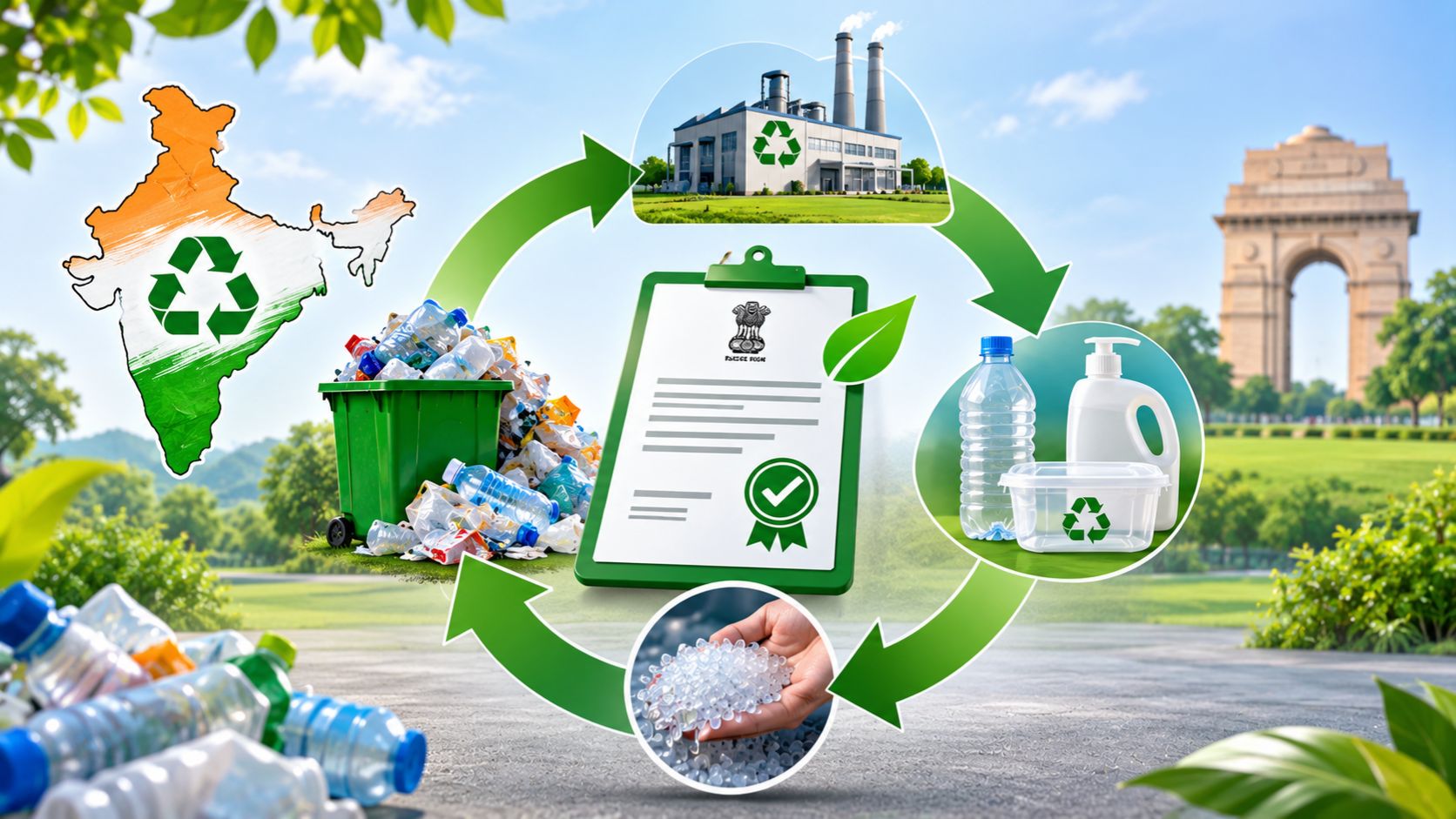
Plastic waste EPR registration is the mandatory enrolment of Producers, Importers and Brand Owners (PIBOs) that place plastic packaging on the Indian market, except micro and small brand owners, on CPCB’s Common EPR Portal. It supports Extended Producer Responsibility under the Plastic Waste Management Rules, 2016, making PIBOs accountable for collecting and processing the packaging they sell.
Extended Producer Responsibility (EPR) means the business that introduces packaging to the market is responsible for what happens to it after use. The legal base is the Plastic Waste Management Rules, 2016. EPR guidelines were added as Schedule II in February 2022, and the Plastic Waste Management (Amendment) Rules, 2026 (notification G.S.R. 237(E), 31 March 2026, in force from Gazette publication) added recycled-content, reuse and audit provisions. You can read the notification in the Gazette of India (PDF).
The Central Pollution Control Board (CPCB) runs the registration system. Reports indicate the stand-alone plastic portal was discontinued on 28 June 2026 and its data migrated to the Common EPR Portal. Guides that still tell you to apply on the old portal address are out of date.
Who needs plastic waste EPR registration in India?
Three roles carry the obligation. Your role, not your company name or sales channel, decides your position.
Producer
Importer
Brand Owner
Plastic waste processors (recyclers and end-of-life disposal operators) register in a separate module. The 2026 amendment also defines a “seller” of plastic raw material such as resin or pellets. Sellers should check the notification for their specific duties.
Exemptions: CPCB’s published FAQ says micro and small brand owners, as classified under the Ministry of MSME criteria, are exempt from the EPR obligation, and export-oriented units are also exempt. The exemption is for brand owners, not for producers or importers. Registration is with CPCB for PIBOs operating in more than two states or Union Territories, and with the relevant State Pollution Control Board or Committee otherwise.
Does your business need plastic EPR registration?
| Your Situation | Likely Position | Verify Next |
|---|---|---|
| You manufacture pouches, bottles or films | Producer: registration likely | Packaging category and quantities; pollution board consents |
| You import goods in plastic packaging | Importer: registration likely | IEC; whether packaging is foreign or re-packed in India |
| Medium or large D2C/FMCG brand using plastic packs | Brand Owner: registration likely | Category-wise tonnage placed on market |
| Micro or small enterprise selling own brand | Brand-owner exemption may apply | Udyam classification; whether you also produce or import |
| Marketplace or retail chain | Covered under CPCB’s FAQ unless micro/small | Your actual role in the packaging chain |
| Seller only reselling another brand’s goods | Depends on who is the brand owner | Whose brand appears on the pack |
| Export-oriented unit | Exempt per CPCB’s FAQ | Whether any goods reach the domestic market |
Illustrative example (fictional): “Masala Mile” is a small snack brand that buys packaged goods from a co-packer and sells them online under its own name. If it qualifies as a micro or small enterprise it may be exempt as a brand owner; if it also imports its own pouches, the importer role is separate. This is an illustration, not advice on your case.
What are the four categories of plastic packaging?
EPR targets depend on category, so classification errors flow into every later figure.
| Category | What It Covers | Examples | Compliance Note |
|---|---|---|---|
| I | Rigid plastic packaging | Bottles, jars, tubs, caps | Recycled-content and reuse targets apply |
| II | Flexible packaging (single or multilayer of different plastics), sheets, covers, carry bags, sachets, pouches | Carry bags, shrink wrap, simple pouches | Recycled-content targets apply |
| III | Multilayered: at least one plastic layer plus one non-plastic layer | Laminated snack packets | Recycled-content target applies to the plastic component only |
| IV | Compostable plastic sheets and carry bags | Certified compostable bags | Compostability standards apply; check certification |
What are the eligibility requirements and documents?
There is no turnover threshold in CPCB’s FAQ beyond the micro and small brand-owner exemption. What you need is evidence of your legal identity, your role and your packaging data. Documents commonly required:
- PAN and GST registration of the entity
- Certificate of incorporation, partnership deed or equivalent entity proof
- Authorised signatory details and authorisation or board resolution
- Packaging catalogue with category classification and annual quantities
- Import Export Code (IEC), for importers
- Consents from the State Pollution Control Board, for producers or brand owners with own production facilities
- Proof of MSME category, where you claim the micro/small status
The list differs by role and changes as the portal is updated, so treat the live checklist on the Common EPR Portal as the final word.
How to register for plastic waste EPR on the CPCB portal
Workflows vary by entity type, so this is the typical sequence rather than a guarantee that every applicant sees identical screens.
Confirm your role. Decide whether you are a producer, importer, brand owner, or more than one.
Use the right portal. Sign in or create a corporate login on the Common EPR Portal, which issues a Common EPR ID.
Prepare packaging data. Tonnage by category (I to IV) for the reference period.
Complete the application. Company details must match your PAN and GST records exactly.
Upload documents. Entity proof, authorisation, consents and IEC where relevant.
Pay the fee through the portal gateway, if the current fee schedule requires it.
Answer queries. Reviewers may ask for clarifications; delays here slow approval.
Check the outcome. Download the registration once granted.
Plan for compliance. Targets, processor tie-ups or certificates and annual returns follow registration.
How much does plastic EPR registration cost, and how long does it take?
| Item | What sources report | Status |
|---|---|---|
| Government application fee | ₹10,000 below 1,000 tonnes a year; ₹20,000 up to 10,000 tonnes; ₹50,000 above | Reported by consultants; confirm on portal |
| Annual processing fee | Reportedly 25% of the application fee, paid with the annual return | Verify before budgeting |
| Consultancy fee | Set by the consultant; separate from government charges | Ask for a written quote |
| Processing time | No statutory timeline found; consultants commonly mention weeks | Never treated as guaranteed |
Incomplete forms, mismatched names and unanswered queries are the usual reasons for delay. Be wary of any provider that promises approval in a fixed number of days.
What are the plastic EPR targets and annual compliance obligations?
Registration is the start. The rules then set yearly obligations, which differ by category, entity type and year. Under the 2026 amendment, PIBOs must use a minimum share of recycled plastic in packaging:
| Category | 2025-26 | 2026-27 | 2027-28 | 2028-29 onward |
|---|---|---|---|---|
| I (rigid) | 30% | 40% | 50% | 60% |
| II (flexible) | 10% | 10% | 20% | 20% |
| III (multilayered, plastic part) | 5% | 5% | 10% | 10% |
Key provisions, as summarised by law and compliance firms from the notification:
- Recycled plastic packaging must meet IS 14534:2023 and carry recycled-content marking; food-contact use must follow FSSAI requirements.
- Exemption is possible where a statutory requirement (for example FSSAI or CDSCO) restricts recycled content, with supporting documents in the annual return.
- Food-contact shortfalls from 2025-26 can be carried forward for up to three years, clearing at least one-third each year.
- Recycled content in imported packaging does not count for importers, who must use a certificate route being built by CPCB.
- Brand owners face reuse targets on Category I rigid packaging, which vary by pack size. Check the Gazette table for your size band.
- Verification may be done by CPCB-designated agencies or Registered Environment Auditors.
Annual return timing: The plastic annual-return module was disrupted by the portal migration. A compliance advisory reports revised FY 2025-26 deadlines of 31 October 2026 for processors and 31 December 2026 for PIBOs, and advises confirming the Office Memorandum on the portal. Do the same before relying on any date.
What is the penalty for not having plastic EPR registration?
There is no single fixed fine. Consequences are layered:
- Environmental compensation (EC): levied by CPCB per tonne of unmet obligation under the polluter-pays principle. Rates are set in CPCB’s EC guidelines and have been revised, and published guides quote different figures, so check the current schedule rather than a blog’s number.
- Operational restrictions: CPCB’s 27 August 2026 notice asked covered entities to register immediately and reportedly said transaction and declaration functions involving unregistered companies would be blocked on the portal.
- Legal action: contraventions can attract action under the Environment (Protection) Act, 1986.
Paying compensation does not cancel the underlying obligation. Facts matter: a missed target, a late return and an unregistered business are different situations.
Common mistakes businesses make
- Misreading the role. A brand that outsources manufacturing is still a brand owner.
- Wrong category. Treating laminated pouches as flexible (II) instead of multilayered (III) changes targets.
- Inconsistent details. Name or address mismatches across PAN, GST and portal profile.
- Ignoring annual returns after registration.
- Following outdated advice, such as the old portal address or old rules.
- Assuming a marketplace listing decides liability. Your role in the packaging chain does.
- Trading with unregistered entities, which CPCB’s August 2026 notice flagged as a violation.
Should you handle plastic EPR registration yourself or consult an expert?
| Factor | In-house | With a consultant |
|---|---|---|
| Best for | Single role, clean packaging data, one category | Multiple roles, many SKUs, importers, tight deadlines |
| Effort | Your team learns the portal and rules | Consultant prepares and files; you supply data |
| Risk | Category or role errors if rules are misread | Quality varies; check scope and written terms |
| Cost | Government fees plus internal time | Government fees plus professional fee |
No rule makes a consultant compulsory. Many businesses do the first registration themselves and seek help for annual returns and certificates. Others hand over the whole process. Both are reasonable.
How JS Certification can help with plastic waste EPR compliance
JS Certification lists plastic waste EPR registration among its EPR certification services. Support described on its plastic waste EPR service page includes category assessment, document preparation, portal filing and help with annual returns. It may suit manufacturers, importers and brands that want a second pair of eyes on role and category. For background, see its explainer What is an EPR certificate?, its guide on EPR registration for e-waste, and its comparison EPR registration consultants in India. Importers will also need an Import Export Code, and micro/small claimants can check Udyam registration.
Before you enquire, keep ready: your PAN, GST and entity proof, a list of packaging types with approximate annual tonnage, and whether you manufacture, import or brand.
Not sure which plastic packaging EPR category applies to you?
Share your packaging details and business role with JS Certification to understand your registration requirements and next steps. Registration and approval depend on CPCB’s review and no outcome is guaranteed.
Plastic waste EPR registration: 10 frequently asked questions
Producers, Importers and Brand Owners (PIBOs) that place plastic packaging on the Indian market need registration, and plastic waste processors register in a separate module. CPCB’s FAQ exempts micro and small brand owners, and export-oriented units, from the obligation.
It depends on role and size. CPCB’s FAQ exempts micro and small brand owners under MSME criteria. Producers and importers do not get that exemption, so a small manufacturer or importer should verify its status before assuming it is exempt.
A D2C brand selling its own products in plastic packaging is a brand owner and may need registration unless it is micro or small. CPCB’s FAQ also covers online platforms and marketplaces. Role, not a listing alone, decides applicability.
A Producer makes plastic packaging or its raw material. An Importer brings in packaging, raw material or goods packed in plastic. A Brand Owner sells under its own brand. One business can hold several roles and must assess each separately.
Category I is rigid packaging. Category II is flexible packaging, including sheets, covers, carry bags, sachets and pouches. Category III is multilayered, with at least one plastic and one non-plastic layer. Category IV covers compostable plastic sheets and carry bags.
Commonly PAN, GST, entity proof, authorised signatory details and packaging data by category. Importers add an IEC, and producers may need pollution board consents. Confirm the current checklist on the Common EPR Portal before applying.
Use CPCB’s Common EPR Portal, which reportedly replaced the stand-alone plastic portal on 28 June 2026. Create your profile, select your role, enter packaging details, upload documents, pay the fee, answer queries and download the registration once approved.
Consultant sources report slab-based government fees of ₹10,000 to ₹50,000 by tonnage, but fees get revised, so confirm on the portal. No statutory timeline was found; consultants commonly cite weeks. Professional fees are separate and vary by provider.
Consequences can include environmental compensation on unmet targets, blocked portal transactions with unregistered entities, and action under the Environment (Protection) Act, 1986. The outcome depends on the violation, so no single fixed penalty applies to every case.
Yes. PIBOs must meet category-wise targets and file annual returns with supporting documents. For FY 2025-26, a compliance advisory reports 31 December 2026 for PIBOs; confirm the date on the portal before relying on it.